
Your skin changes dramatically during flights, so finding the best hydrating face mask for flights is essential. Inside the cabin, humidity drops to just 10-20% – far below the 40-70% your skin needs to stay healthy. This dry environment quickly strips moisture from your skin, leaving it tight, dull, and prone to breakouts. However, choosing and properly applying the right hydrating mask can keep your skin healthy and moisturized throughout your journey. Here’s how!

What Happens to Skin on Flights?
During flights, the air in the cabin becomes extremely dry, with humidity levels dropping to 10-20%. This is much lower than the normal 40-70% humidity our skin is used to on the ground, and it immediately starts to affect your skin’s moisture levels.
At 35,000 feet, the combination of altitude and recycled cabin air quickly pulls moisture from your skin’s surface. This isn’t just uncomfortable – it can make your skin feel tight and look dull within hours of your flight.
The dry cabin environment causes several skin reactions. First, your skin loses water quickly. Then, trying to protect itself, it might produce extra oil, which can cause breakouts. Your skin can also become itchy, flaky, and more sensitive than usual. For some people, this can make fine lines temporarily more visible and cause redness or irritation.
Key Ingredients for Hydrating Face Masks
Hyaluronic
Hyaluronic acid is a powerful hydrating ingredient that holds up to 1,000 times its weight in water. During flights, it pulls moisture into your skin and keeps it there, fighting against the drying effects of cabin air.
Ceramides
Ceramides are natural lipids that create a protective barrier, filling gaps between skin cells to prevent moisture loss. This barrier becomes especially important in dry cabin conditions where your skin needs extra protection.
Glycerin
Glycerin attracts water to your skin and helps maintain balanced hydration levels. It’s gentle and effective for most skin types, making it perfect for in-flight skincare when your skin needs reliable moisture.

Natural Hydrating Ingredients
Aloe vera provides both hydration and soothing benefits, while ingredients like chamomile and cucumber extract add moisture while calming any irritation that might develop during your flight.
Niacinamide
Niacinamide (vitamin B3) strengthens your skin’s protective barrier while hydrating. It also helps control oil production – important because dry cabin air can trigger excess oil production. When choosing a flight face mask, look for products containing several of these ingredients for the best results.
Related: How to Fix Dry Skin After Travel
Types of Hydrating Masks for Flights
Cream Masks
Cream masks are easy to use during flights because you can apply a thin, nearly invisible layer. You don’t need to remove them – just massage any extra product into your skin. They work well with other skincare products and won’t draw attention from other passengers. Most cream masks are travel-friendly and won’t count toward your liquid allowance if they’re under 3.4 oz.
Sheet Masks
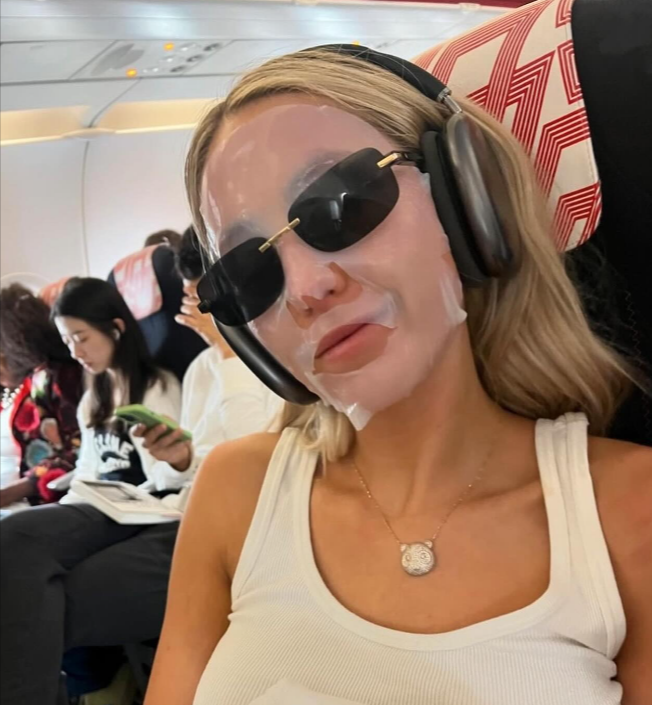
Sheet masks provide intense hydration quickly because they create a barrier that helps ingredients absorb better. However, they can be awkward to use on planes – you’ll need to remove and dispose of them after 15-20 minutes. They’re best saved for longer flights when the cabin lights are dimmed, or in first/business class where you have more privacy.
Overnight Masks
Overnight masks are perfect for flights because they’re clear on the skin and work for hours. You can apply them at the start of your flight and they’ll keep working until you land. They’re designed to be worn for long periods so that they won’t feel heavy or sticky. While hydrating, most overnight masks also help protect your skin from the dry cabin air.
Top Face Masks for Hydration on Flights
Best Overall Mask
Laneige Water Sleeping Mask works perfectly during flights because of its clear gel texture. It absorbs quickly and won’t draw attention. The cooling sensation helps refresh tired skin during long flights.

Prices pulled from the Amazon Product Advertising API on:
Product prices and availability are accurate as of the date/time indicated and are subject to change. Any price and availability information displayed on [relevant Amazon Site(s), as applicable] at the time of purchase will apply to the purchase of this product.
Fast-Acting Options
Dr. Jart+ Water Fuse Hydro Sleep Mask starts working within minutes. It’s ideal for shorter flights when you need quick hydration. The light formula won’t feel heavy or uncomfortable while you’re traveling.
Best for Long Flights
Summer Fridays Jet Lag Mask is designed specifically for air travel. It can be applied multiple times during long flights without feeling thick or sticky, and the formula keeps working throughout your journey.

Prices pulled from the Amazon Product Advertising API on:
Product prices and availability are accurate as of the date/time indicated and are subject to change. Any price and availability information displayed on [relevant Amazon Site(s), as applicable] at the time of purchase will apply to the purchase of this product.
Affordable Choice
Neutrogena Hydro Boost Overnight Gel Mask costs less but still provides great hydration. It’s light enough to wear under an eye mask if you plan to sleep. The small size fits easily in your carry-on liquids bag.

Prices pulled from the Amazon Product Advertising API on:
Product prices and availability are accurate as of the date/time indicated and are subject to change. Any price and availability information displayed on [relevant Amazon Site(s), as applicable] at the time of purchase will apply to the purchase of this product.
Additional Tips for Hydration During Flights
Drink Plenty of Water
Pack an empty reusable water bottle and fill it after security. Drink 8 ounces of water every hour during your flight. Avoid alcohol and caffeine since they can make dehydration worse.
Use Face Mists
Keep a travel-sized facial mist (under 3.4 oz) in your carry-on for quick hydration. Choose alcohol-free and fragrance-free mists with ingredients like rose water or glycerin. You can spray these over your hydrating mask during the flight.
Don’t Wear Heavy Makeup
Heavy makeup blocks your skin from absorbing moisture during flights. If possible, fly with clean, bare skin so your hydrating mask can work better. If needed, use only light products like tinted moisturizer.
Apply Face Oil First
Put on a thin layer of face oil before your hydrating mask. This helps seal in moisture during your flight. Use just 2-3 drops – too much can prevent your mask from absorbing properly.
Control Your Air Space
Point the air vent above your seat away from your face to prevent extra drying. In window seats, keep the shade down during bright daylight since UV exposure at high altitudes can dehydrate your skin faster.

How to Apply a Face Mask During a Flight
Clean Your Hands
Pack a travel-sized hand sanitizer in your carry-on. Clean your hands thoroughly before touching your face or skincare products. The surfaces on planes collect lots of germs, so this step is essential. Sanitizing wipes are also useful for cleaning your immediate area before starting your skincare routine.
Remove Makeup and Dirt
Use gentle face wipes that don’t need water to clean your face completely. Take off all makeup, oil, and dirt. Pat your face dry with a clean tissue – don’t rub, as this can irritate your skin. Your skin needs to be clean for the mask to work properly.
Put On Your Mask
For cream or gel masks, use a small amount and spread it evenly across your face. Apply it in gentle upward motions. Focus on the areas of your face that feel the driest first. Keep the layer thin so it’s not obvious you’re wearing a mask. Make sure to avoid getting the product too close to your eyes or mouth.
When to Apply
Apply your mask about an hour after the plane takes off, once the cabin pressure has settled. On longer flights, you can apply another layer if your skin starts feeling dry again. Don’t apply during meal service – wait until after you’ve eaten. For overnight flights, apply the mask before you try to sleep.
Be Considerate
Since you’re in a public space, avoid masks with strong smells that might bother other passengers. If you want to use a sheet mask, wait until the cabin lights are dim, or only use them in premium cabins with more privacy. In regular seats, use clear gel or cream masks that look like regular moisturizers. Stay in your seat while applying the mask and try not to take up too much space with your skincare routine.
Related: 10 Hacks for Traveling Hair Care
Post-Flight Skincare Recovery
Use a gentle cream or milk cleanser to remove any leftover mask and airplane residue from your face. Regular foaming cleansers can be too harsh on skin that’s already dry from the flight, so stick with something mild.
Right after landing, use a 10-minute hydrating mask to restore moisture to your skin. Products with cucumber or aloe work well for quick relief from tightness. If you need to apply makeup soon after, choose a clear gel mask that won’t leave any residue.
After masking, apply your products in the right order for maximum hydration. Start with a hydrating essence, gently patting it into your skin. Next, apply your regular moisturizer, and finish with a few drops of facial oil to keep all the moisture in place.
For any redness or irritation after your flight, use cool compresses on affected areas for about 30 seconds. Cotton pads soaked in green tea work particularly well for reducing inflammation while providing antioxidant benefits.
Give your skin 24-48 hours to recover fully. During this time, avoid using any harsh exfoliants or active ingredients that might cause more irritation. Focus on gentle, hydrating products instead. Continue drinking plenty of water to help your skin recover from the dehydrating effects of airplane air.
No More Mile-High Dryness
Your flight doesn’t need to dry out your skin – there are simple ways to keep it healthy and hydrated. Pick a hydrating mask that works for you – cream, sheet, or overnight formulas all help protect your skin during the flight. With good preparation and the right skincare routine, your skin can stay comfortable throughout your journey. Flying doesn’t have to mean dry skin – you’ve got this covered!
FAQs
How do I keep my face hydrated on a plane?
Apply a hydrating face mask or overnight mask during your flight, avoiding heavy makeup. Use a facial mist for quick moisture boosts and drink water regularly. Point air vents away from your face and apply a thin layer of face oil before your mask. Choose products with hyaluronic acid, ceramides, or glycerin for maximum hydration.
What is the best face mask to wear on a plane?
The Laneige Water Sleeping Mask is ideal for flights due to its clear gel texture and quick absorption. For longer flights, try Summer Fridays Jet Lag Mask, which can be reapplied without feeling heavy. Both masks provide lasting hydration without drawing attention or feeling uncomfortable during travel.
Can I take a hydrating face mask on a plane?
Yes, you can bring hydrating face masks on planes if they follow TSA liquid rules (under 3.4 oz/100ml). Cream and overnight masks are the most travel-friendly and don’t count toward liquid allowance if they’re thick enough. Pack them in your clear, quart-sized bag with other liquids to ensure smooth security screening.
What is the best hydration for flight?
The best flight hydration combines internal and external moisture. Drink 8 ounces of water every hour, avoid alcohol and caffeine, and use a hydrating face mask containing hyaluronic acid or glycerin. Supplement with alcohol-free facial mists and a light layer of face oil for complete skin protection.
